

October 21, 2026
“I Didn’t See You” Is Not an Excuse: The Legal Reality of Blind Spot Truck Accidents
April 22, 2026
Edward Smith
“I Didn’t See You” Is Not an Excuse: The Legal Reality of Blind Spot Truck Accidents
Blind spot truck accidents: When a passenger vehicle is sideswiped or crushed by a merging commercial truck, the first words out of the truck driver’s mouth are often, “I didn’t see you.” For decades, trucking companies and their insurance adjusters have used this phrase to shift the blame onto the victim. They argue that because the smaller vehicle was traveling in the truck’s “No-Zone” or blind spot, the victim shares responsibility for the crash.
However, from a legal standpoint, “I didn’t see you” is not an excuse—it is an admission of negligence. Commercial truck drivers are highly trained professionals operating vehicles that can weigh up to 80,000 pounds. They are required by federal law to execute specific safety protocols before making any lateral movement. When a truck driver fails to see a vehicle in their blind spot, it means they failed to look properly, failed to use their mirrors, or failed to rely on their training.
If you or a loved one has been injured in a collision with a large truck, understanding the legal reality of blind spot accidents is critical to protecting your right to compensation.
The Myth of the “No-Zone” Defense
The concept of the “No-Zone” was originally introduced by the Federal Motor Carrier Safety Administration (FMCSA) in 1994 as a public safety campaign. The goal was to educate passenger vehicle drivers about the four massive blind spots surrounding commercial trucks:
- Front: Up to 20 feet directly in front of the cab.
- Rear: Up to 200 feet directly behind the trailer.
- Left Side: Extending from the driver’s door to the middle of the trailer.
- Right Side: Extending from the front of the cab to the rear of the trailer across two lanes.
While the campaign was intended to promote highway safety, insurance adjusters quickly weaponized the No-Zone concept. In personal injury claims, defense attorneys frequently argue that the victim was contributorily negligent simply for existing in the truck’s blind spot. They attempt to frame normal highway driving—where passing a truck or traveling in an adjacent lane is often unavoidable—as a reckless choice made by the victim.
This defense strategy is particularly dangerous in states with modified comparative negligence laws. If an insurance company can convince a jury that you were 51% or more at fault for the accident because you were in the No-Zone, you may be barred from recovering any compensation for your injuries.
Prominent trial lawyers, such as Nick Rowley and Rick Friedman, emphasize that defeating this defense requires exposing the corporate decision-making and driver failures that actually caused the crash, rather than allowing the defense to litigate the victim’s lane position in isolation.
The Federal Duty to Clear Blind Spots
A Commercial Driver’s License (CDL) is not a standard driver’s license. It requires rigorous classroom instruction and behind-the-wheel training, specifically focused on managing the inherent dangers of operating a massive vehicle. The FMCSA’s Entry-Level Driver Training (ELDT) rule mandates that drivers learn how to manage space and monitor their surroundings.
When a commercial driver prepares to change lanes or merge, they are required to follow a strict, sequential protocol:
- Signal Intent: Activate the turn signal well in advance of the maneuver.
- Check All Mirrors: Scan flat mirrors, convex (wide-angle) mirrors, and hood-mounted spot mirrors.
- Recheck the Blind Spot: Specifically monitor the side of the intended lane change.
- Pause: Wait briefly to ensure no vehicle has entered the blind spot since the last check.
- Execute Gradually: Begin the lane change slowly while continuing to monitor the mirrors.
When a truck driver merges into a passenger car and claims they did not see it, the legal question is not whether the car was in the blind spot. The question is: Which step of the mandatory lane-change protocol did the driver skip?
Did they fail to check their convex mirrors? Did they merge abruptly without pausing? Did they fail to signal? Every omitted step is a breach of the driver’s duty of care and constitutes independent negligence.
The Role of Inadequate Surveillance in Truck Crashes
The danger of failing to check blind spots is not theoretical; it is backed by extensive federal data. The FMCSA’s Large Truck Crash Causation Study (LTCCS), the most comprehensive federal analysis of truck crash causes, identified “inadequate surveillance” as a primary factor in commercial vehicle accidents.
Inadequate surveillance—which includes failing to look, looking but not seeing, or failing to check blind spots before a lane change—was found to carry a 9.3x relative crash risk. To put this in perspective, this is a higher relative risk than driver fatigue (8.0x), speeding (7.7x), or internal distraction (5.8x).
|
Driver Behavior
|
Relative Crash Risk
|
|
Inadequate Surveillance
|
9.3x
|
|
Driver Fatigue
|
8.0x
|
|
Traveling Too Fast for Conditions
|
7.7x
|
|
Internal Distraction
|
5.8x
|
|
External Distraction
|
5.1x
|
Data Source: FMCSA Large Truck Crash Causation Study
By the federal government’s own metrics, failing to clear a blind spot is one of the most dangerous behaviors a commercial truck driver can engage in. When an insurance adjuster tries to blame you for being in the No-Zone, they are ignoring the fact that the truck driver engaged in a statistically highly dangerous and entirely preventable behavior.
Equipment Failures and Corporate Negligence
Liability in a blind spot accident often extends beyond the individual truck driver. Trucking companies bear a non-delegable duty to ensure their fleet is properly equipped and maintained, and that their drivers are adequately trained.
Federal regulations (49 CFR § 393.80) require every commercial truck to be equipped with two rear-vision mirrors, positioned to provide a view of the highway to the rear along both sides of the vehicle. Furthermore, many modern commercial trucks are equipped with advanced safety technology designed specifically to eliminate blind spot accidents, including:
- Convex and Hood-Mounted Mirrors: Essential for viewing the immediate front and right-side danger zones.
- Blind Spot Detection Systems: Radar or camera-based systems that provide visual or auditory alerts when a vehicle is in an adjacent lane.
- Collision Mitigation Technology: Systems that can automatically apply the brakes if a collision is imminent.
If a crash occurs because a truck’s mirrors were broken, improperly adjusted, or missing, the trucking company can be held liable for a maintenance violation. Similarly, if the truck was equipped with a blind spot detection system and the driver ignored the warning alert, or if the company disabled the system to reduce driver annoyance, this constitutes severe corporate negligence.
Trial attorneys following the Brian Panish school of litigation focus heavily on this corporate negligence angle. By investigating what the trucking company knew about their driver’s safety record, how they maintained their vehicles, and whether they prioritized delivery speed over safety technology, attorneys can reframe the narrative. The crash is no longer just a driver making a mistake; it is the foreseeable result of a company prioritizing profits over human life.
Protecting Your Rights After a Blind Spot Accident
If you are involved in a blind spot collision with a commercial truck, the steps you take immediately following the crash can significantly impact your ability to recover compensation.
- Seek Medical Attention: Your health is the top priority. Even if you feel fine, adrenaline can mask severe injuries. Documenting your injuries immediately is also crucial for your legal claim.
- Call the Police: A formal police report will document the position of the vehicles, statements from the drivers, and any citations issued to the truck driver for unsafe lane changes.
- Gather Evidence: If you are physically able, take photos of the damage to both vehicles, the road conditions, and the truck’s mirrors. Obtain contact information from any eyewitnesses who saw the truck merge into your lane.
- Do Not Give a Recorded Statement: The trucking company’s insurance adjuster will likely contact you shortly after the crash. Do not provide a recorded statement or admit any fault. Their goal is to get you to say something that implies you lingered in the No-Zone intentionally.
- Consult an Experienced Truck Accident Attorney: Truck accident litigation is highly complex, involving federal regulations, corporate liability, and aggressive defense tactics. You need an advocate who understands how to dismantle the No-Zone defense.
Conclusion
Being in a truck’s blind spot is a normal condition of highway driving; merging into an occupied lane without looking is an act of negligence. “I didn’t see you” is an admission that the truck driver failed to perform the basic safety protocols required by their commercial license.
Victims of blind spot truck accidents deserve full compensation for their medical bills, lost wages, and pain and suffering. By holding negligent drivers and their corporate employers accountable, we not only secure justice for victims but also force the trucking industry to prioritize safety and adopt the technology necessary to prevent these devastating crashes.
The Law Offices of Ed Smith assists injury victims in pursuing compensation and navigating the claims process.
For free and confidential assistance, call (916) 921-6400 or (800) 404-5400, or visit AutoAccident.com.
Edward A. Smith
Personal Injury Attorney | Founder, AutoAccident.com
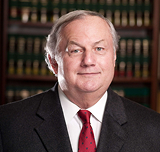
Ed Smith has fought for injury victims in Northern California for over 40 years, securing multi-million-dollar verdicts and settlements in complex personal injury cases.
VIEW FULL PROFILEBar Admissions:
- State Bar of California
- Sacramento County Bar Association
- Consumer Attorneys of California
- Capital City Trial Lawyers Association
- American Trial Lawyers Association
Credentials:
- J.D., McGeorge School of Law
- B.A., UC Davis — Summa Cum Laude
- 10.0 Avvo Rating
- Member, Million Dollar Forum
- Member, National Association of Distinguished Counsel